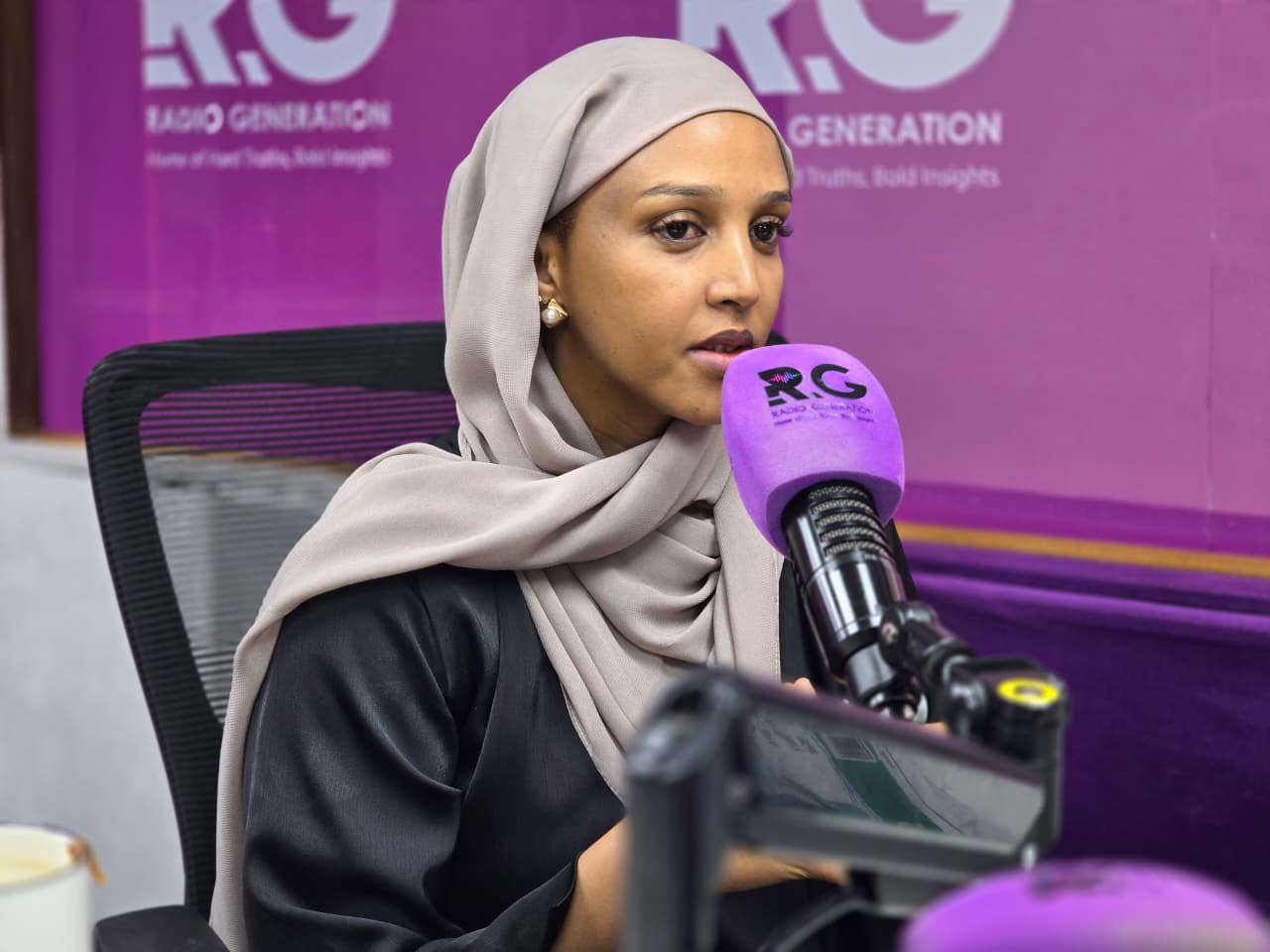
Kenya’s proposed Sovereign Wealth Fund (SWF) could mark an important shift in how the country manages its natural resources, but its success will depend squarely on governance, transparency, and accountability, Energy and Natural Resources Lawyer Halima Ali has said.
Speaking on Radio Generation on Thursday, Ali said the idea of setting aside proceeds from natural resources for future generations was rooted in basic economic principles, arguing that Kenyans today were mere trustees for future generations.
She said the objective should be to protect the future generations from the politics of the present when it comes to managing national wealth.
Recently, President William Ruto’s government moved to establish a Sovereign Wealth Fund alongside a National Infrastructure Fund as part of its long-term economic transformation strategy.
In December 2025, the Cabinet approved the creation of the SWF, positioning it as a key vehicle to manage and invest revenues from natural resource royalties, dividends from public investments and a share of privatisation proceeds.
The fund is designed to strengthen fiscal discipline, enhance economic resilience, and support long-term national competitiveness, while safeguarding national wealth for future generations.
It is meant to operationalise constitutional principles on inter-generational equity and prudent public finance management.
The President tabled the Sovereign Wealth Fund with his Cabinet as part of a broader Sh5 trillion development roadmap aimed at shifting Kenya away from heavy reliance on debt and taxation toward sustainable, investment-led growth.
By ring-fencing revenues and mobilising domestic savings and private capital, the fund seeks to provide a stabilisation buffer against economic shocks and attract long-term investment into priority sectors such as infrastructure, energy, transport, and food security.
This initiative reflects the administration’s goal of creating a financial mechanism that can preserve national assets, reduce dependence on borrowed funds, and support durable economic development towards achieving a world-class economy.
Ali welcomed the move in principle, noting that many developing countries had for decades remained trapped in cycles of borrowing and debt repayment despite possessing vast natural resources.
“For a long period of time, developing nations have been just a slaves of sovereign debt,” she said, adding that taking a deliberate step towards saving was a good step towards management of our resources.
She acknowledged, however, that Kenya’s situation was complex. The country faces heavy debt obligations, and questions have been raised about whether it makes sense to save while continuing to borrow.
The Lawyer cautioned against treating national debt like personal debt. “Unfortunately, the debt of a country is a bit different,” she said, stressing that resources belong not only to the present generation but also to those yet to be born.
She warned that postponing savings until all debt was cleared could be dangerous, particularly because many natural resources were depletable.
“By the time you finish it, the resources are gone,” she said, adding that there is no possibility that you’ll actually finish paying this sovereign debt using current income streams alone.
She argued that a sovereign wealth fund should be viewed as a national savings and stabilisation mechanism, capable of cushioning the economy against shocks and volatility.
“You can’t live from hand to mouth as a country,” Ali said, describing the current situation as dangerous and unstable for governance.
Drawing comparisons with countries such as Norway, the United Arab Emirates, Alaska, and Botswana, she said Kenya should learn from international examples while remaining mindful of its own context.
She cautioned against simplistic comparisons, noting differences in population size, governance cultures, and fiscal discipline. “Our problems are unique,” she said, adding that Kenya had “a culture of spending” rather than saving.
The Lawyer said the proposed model carried risks, particularly if it was closely tied to the annual budget. She warned that short-term fiscal pressures could tempt decision-makers to divert funds.
“The annual budget is a risk,” she said, arguing that long-term investment decisions should be insulated from political and budgetary pressures.
She also raised concerns about the proposed governance structure, questioning whether creating a new board and bureaucracy was necessary.
Ali asked whether existing institutions such as the Kenya Revenue Authority, the Central Bank of Kenya and the National Treasury could be used instead. “Why must we create something new?” she asked, warning that additional boards, allowances, and salaries could undermine the fund’s purpose.
The lawyer stressed that merit-based appointments would be critical. She questioned who would manage the fund and whether it would attract professionals with expertise in long-term investment, rather than political appointees. “Are we just replicating the problem?” she asked, pointing to past failures in public fund management.
Ali said public participation would be essential if the fund was to gain legitimacy and public trust. Citizens, she argued, needed to understand how the fund would work, why it was being establishe,d and how it would benefit both current and future generations.
Ultimately, Ali said the fund’s value lay not just in saving money, but in how that money was invested and protected.
“It all depends on the kind of clauses we put in in terms of transparency, in terms of the level of accountability,” she said, adding that without strong oversight, including from Parliament, the promise of the sovereign wealth fund could easily be lost.































Comments
Sign in with Google to comment, reply, and like comments.
Continue with Google